
Static loops make lazy musicians.
Jamprovise exists to forge adaptable, fluent improvisers by intentionally disrupting your comfort zone.
A note from the creator of Jamprovise
I build software for a living, but I’m a lifelong musician at heart. Practicing is a daily ritual for me, which is why I had to fix a massive bottleneck in my routine: I was spending more time than I wanted creating backing tracks instead of actually practicing, interrupting my momentum. I’d see an inspiring YouTube lesson, but sitting at a computer programming chords felt like data entry. If I wanted to switch vibes, transpose a progression through multiple keys, or program the drums or bass to drop out every four bars to test my timing, I’d lose precious time just clicking around a MIDI grid.
I wanted a lightweight setup that put all my practice tools in one place. The goal was to build a lean, mean practicing machine so I could just pick up my instrument and instantly have a track to play over.
Jamprovise started as that personal shortcut, and it didn't stop there. I’m constantly adding new tools and features to the platform today, while continuing to improve the AI capabilities. It completely changed my own practice sessions, and I hope it helps you do the same.
- Sam Darabi
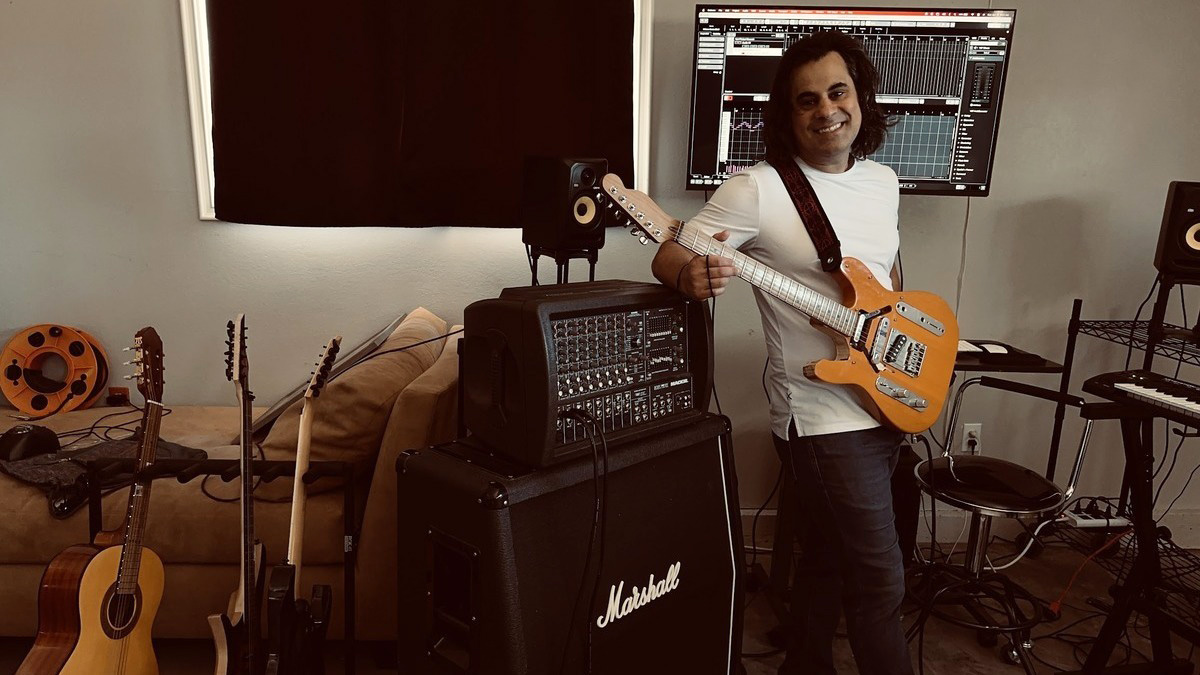
How I Practice
Coming Soon
The 12-Key Major 7 Workout
Taking a single chord quality and running it through the entire Circle of Fourths. Instead of manually programming 12 different tracks in a DAW, I use this sequence to drill my major scales and arpeggios seamlessly without ever taking my hands off the instrument.
Coming Soon
Speed Building: Bach Prelude in C
Classical pieces are incredible for finger dexterity. I use Jamprovise to create a loop that automatically bumps the tempo every few bars. It forces me to push my speed limits while maintaining strict timing and accuracy.
Coming Soon
Transposition Drill: Cello Suite No. 1
Memorizing a piece in one key is standard; transposing it on the fly is where real mastery happens. This track cycles Bach's iconic Cello Prelude through G, C, and D major, testing my absolute fretboard awareness.
Coming Soon
Diatonic Ear Training (Randomized)
A true test of relative pitch and adaptability. This sequence randomly fires off the 7 diatonic chords of a single key. My goal is to instantly identify the Roman Numeral by ear and play the corresponding arpeggio without hesitation.